A manual car can feel like it is asking you to do too much at once: find the biting point, check the mirrors, select a gear, steer accurately and watch for other road users. This manual driving lessons guide is designed to make that process feel manageable. With calm, structured one-to-one tuition, each skill is introduced in the right order, so you can build confidence without being rushed.
For many learners in Milton Keynes, Bletchley and Newport Pagnell, learning in a manual is a practical choice. It gives you a full manual driving licence when you pass, allowing you to drive both manual and automatic cars. More importantly, good manual tuition helps you develop awareness, judgement and control that stay with you long after the practical test.
What to Expect From Your First Manual Lessons
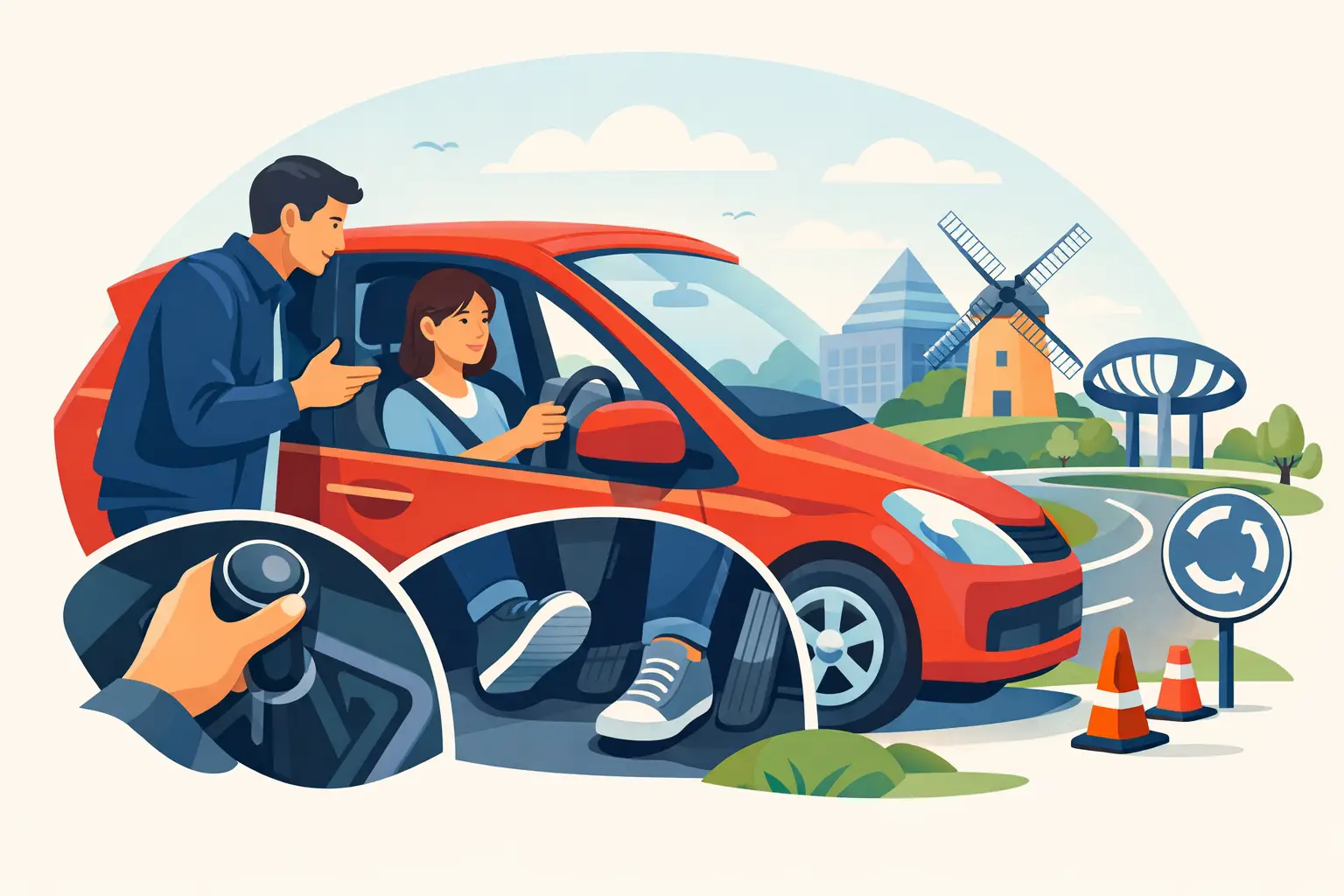
Your first lesson is not about being perfect or driving through busy traffic straight away. It is about becoming comfortable in the car and understanding the controls. A qualified Approved Driving Instructor will usually begin somewhere quiet, where there is space to practise without unnecessary pressure.
You will look at the cockpit drill first: adjusting the seat and mirrors, checking the doors are secure and learning where the pedals, gears, handbrake and key controls are. You will also cover the basic safety routines that should become second nature every time you drive.
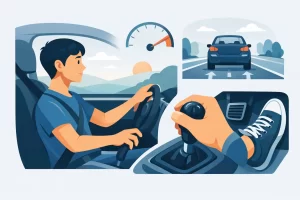
The clutch is often the part learners worry about most. You will learn how to press it fully, select first gear and raise it slowly until you feel the car start to pull. This is the biting point. It takes practice, and stalling is normal. A patient instructor will explain what happened, help you reset safely and give you another chance without making you feel embarrassed.
Once moving off and stopping are becoming more consistent, lessons can begin to include steering, gear changes, junctions and quieter residential roads. Progress is personal. Some learners are ready to move on quickly, while others benefit from extra time on one skill. Both approaches are completely valid.
Manual Driving Lessons Guide: Building Skills Step by Step
Manual driving is best learnt as a sequence rather than a collection of things to memorise. Each new task builds on the one before it, which is why regular lessons are often more effective than trying to do too much in one session and then leaving a long gap.
Clutch control and moving off
Clutch control is especially useful in slow-moving traffic, hill starts and manoeuvres. At first, your attention may be fixed on your feet. With practice, you will start to recognise the sound and feel of the engine, using a little gas and controlled clutch movement to keep the car steady.
A good instructor will help you avoid relying on guesswork. You should understand why the car stalls, why it may roll back on a hill and how to correct it safely. That understanding makes the skill more reliable when you meet a different road, a steep slope or a busy roundabout.
Gears, speed and planning ahead
Changing gear becomes easier when you link it to the road ahead. Rather than waiting until the engine is loud or the car feels uncomfortable, you learn to plan for bends, junctions, changing speed limits and traffic conditions.
You will practise selecting the right gear for the speed and situation, while keeping both hands under control and maintaining effective observations. There is no need to rush gear changes. Smooth, safe driving matters more than changing gear quickly.
Junctions, roundabouts and busy roads
Milton Keynes has a wide range of roads to prepare you for everyday driving, from quieter estates to dual carriageways and roundabouts. Roundabouts can feel intimidating at first because they involve positioning, speed, observations and timing. Breaking the routine into clear stages makes them far less daunting.
Your instructor can help you build a consistent approach: check the signs, choose the correct lane, use mirrors and signal where appropriate, approach at a safe speed, then make a calm decision when it is safe to go. The aim is not to force your way into traffic. It is to read the road early and make safe, controlled choices.
How Long Does It Take to Learn in a Manual?
There is no honest fixed number of lessons for every learner. Your starting point, how regularly you drive, your confidence, previous experience and opportunities for private practice can all affect the pace of learning.
A learner who takes regular full-hour lessons may find it easier to retain skills and maintain momentum. Longer gaps can mean spending part of each lesson revisiting things that were beginning to settle. That does not mean you need to book more than you can afford. A clear plan based on your availability and budget is better than putting yourself under pressure.
Private practice with a suitable accompanying driver can be valuable, particularly for repetition of simple routines. However, it works best alongside professional instruction. An instructor can spot habits that may not be obvious to family or friends, such as missing mirror checks, holding the clutch down too long or approaching junctions too quickly.
Choosing the Right Manual Instructor
The right instructor should help you feel supported while still setting clear standards for safe driving. You need someone who explains tasks in plain language, adapts lessons to your progress and gives useful feedback rather than simply telling you what went wrong.
Before booking, check that your instructor is a fully qualified Government Approved Driving Instructor. Ask whether lessons are one-to-one, whether the advertised lesson is a full hour, and how cancellations, payments and block bookings work. Clear pricing and no hidden charges make it easier to plan your learning.
It also helps to choose tuition that fits your life. Door-to-door lessons can save time if you are balancing college, work or family responsibilities. If you live locally, an instructor who knows Milton Keynes test routes and common road features can prepare you for the areas you are likely to encounter, without teaching you to rely on a route by memory.
Pav’s Driving School provides dedicated manual tuition with a friendly, relaxed approach, helping learners build the skills needed for independent driving as well as the test.
Preparing for the Practical Driving Test
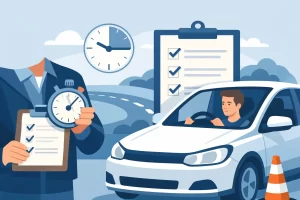
The practical test is not a performance where everything must be flawless. It is an assessment of whether you can drive safely, independently and with reasonable control. You may make a minor error and still pass, but repeated issues or a serious safety mistake can affect the result.
As your test approaches, lessons should increasingly reflect real driving. That includes following sat nav directions or road signs, driving in a variety of conditions, completing manoeuvres and dealing with situations you have not been specifically prompted through. The goal is to show that you can think ahead and make safe decisions on your own.
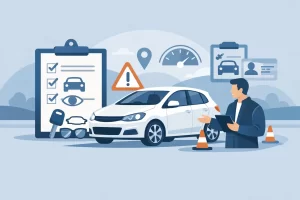
You should also practise the “show me, tell me” vehicle safety questions. These are straightforward when you understand them, but they are much easier to answer calmly if you have rehearsed them in the car you will use for the test.
Car hire for the driving test can be helpful if you have learnt in that vehicle and feel comfortable with its clutch, controls and visibility. Familiarity removes one unnecessary worry on a day when you want to focus on driving well.
Manual or Automatic: Is Manual Still Right for You?
Manual is not automatically the right choice for everyone. An automatic can be a sensible option if you need to pass quickly, find clutch control consistently difficult or mainly expect to drive automatic cars. There is no shame in choosing the route that makes safe driving more achievable for you.
That said, manual lessons remain a strong option if you want the flexibility of a manual licence, enjoy learning how the car responds and are prepared to give clutch control time. The first few lessons can feel demanding, but many learners find that the coordination gradually becomes natural.
If nerves are holding you back, focus on the next small skill rather than the whole journey to test day. A calm instructor, regular practice and permission to make ordinary mistakes can turn a manual car from something intimidating into a practical part of your independence.