Passing your test matters, but feeling able to drive independently afterwards matters more. If you are searching for “driving lessons Bletchley manual”, you need calm, structured tuition that helps you deal with real roads, real traffic and the parts of driving that may currently feel daunting.
Manual driving gives you direct control of the car and can be a practical choice if you want the flexibility to drive either a manual or automatic vehicle once you have passed. The learning process takes patience, regular practice and an instructor who explains things clearly without making you feel rushed.
What to expect from manual driving lessons in Bletchley
Your first lesson should be about getting comfortable, not being expected to know everything straight away. A fully qualified Approved Driving Instructor will begin by finding out what experience you have, whether that is none at all, a few lessons in the past, or practice with a family member.
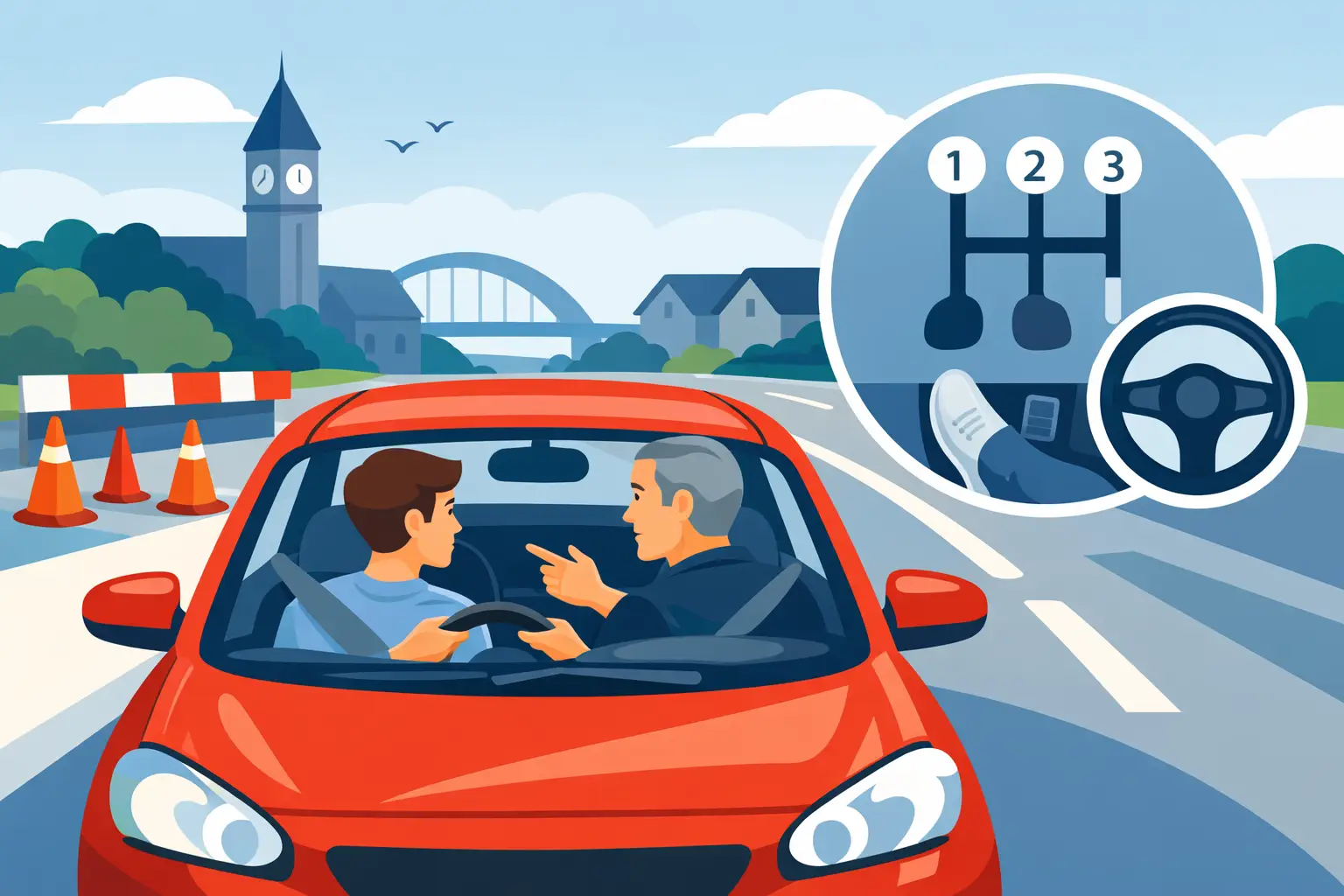
For a complete beginner, this usually means learning the driving controls, how to set up the seat and mirrors, and how to move off and stop safely. You will be introduced to the clutch and gears in manageable stages. Stalling is a normal part of learning a manual car, and it becomes much less worrying when you understand why it happens and what to do next.
As your confidence grows, lessons can cover quieter residential roads, junctions, roundabouts, dual carriageways, manoeuvres and independent driving. Bletchley offers a useful mix of road types, so you can build experience gradually rather than being thrown into difficult situations too early.
The best lessons are one-to-one and tailored to you. Some learners pick up clutch control quickly but need more time with roundabouts. Others are comfortable in traffic but need extra support with parking or planning ahead. There is no benefit in comparing your progress with a friend. Safe driving is learned at a pace that lets good habits stick.
Why choose a manual licence?
A manual licence allows you to drive both manual and automatic cars. For many learners, that extra flexibility is the main reason to choose manual lessons. It can give you more choice when buying, borrowing or hiring a vehicle in future.
Manual driving does involve more to think about at the beginning. You will coordinate the clutch, accelerator, brake and gear lever while also watching the road, checking mirrors and making safe decisions. That can feel like a lot, especially on early lessons. With clear instruction and repeated practice, however, these actions begin to feel more natural.
An automatic licence may suit some people better, particularly where a learner has limited time, finds gear changes highly stressful, or knows they will only ever need an automatic car. There is no one right choice for everyone. The important thing is choosing tuition that supports your goals and helps you become a safe, confident driver.
Building clutch control without the pressure
Clutch control is often the part learners mention first. The key is not trying to do every action at once. You will learn to find the biting point, move away smoothly and change gears at the right time. Hill starts and slow-moving traffic can come later, once the basics are more familiar.
A patient instructor will talk through each stage, allow time to practise and help you recover safely if the car stalls. A stall is not a failure. It is feedback that helps you understand the pedals and develop better control next time.
Lessons that prepare you for everyday driving
The practical driving test checks that you can drive safely and independently, but learning should not become a race to memorise test routes. Good manual driving lessons help you understand the reasons behind each decision: why you choose a particular road position, when you should wait at a junction and how early you need to respond to a developing hazard.
In and around Bletchley, you may encounter busy roundabouts, changing speed limits, pedestrian crossings, parked cars and varied traffic conditions. These are valuable learning opportunities. You will develop observation, anticipation and judgement, rather than simply learning a sequence of actions.
Your instructor should also help you become familiar with the elements that can appear on the practical test. This includes manoeuvres such as bay parking, parallel parking and pulling up on the right, as well as the independent driving section using a sat nav or traffic signs. You may also practise the show me, tell me vehicle safety questions so there are no surprises on the day.
How many lessons will you need?
There is no honest fixed number. The time you need depends on previous experience, how regularly you learn, your confidence, how much private practice you can get and how quickly you absorb new skills.
Weekly lessons often work well because they give you time to reflect and practise without leaving such a long gap that you forget what you covered. Some learners prefer longer sessions once they are ready to travel further or practise several topics in one lesson. Others benefit more from steady, focused hourly lessons.
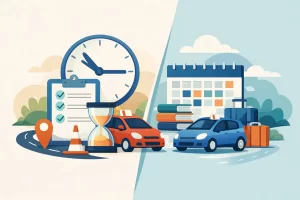
Block bookings can be a sensible way to plan your learning and reduce the cost per lesson, while pay-as-you-go lessons offer flexibility. Whichever option you choose, check that prices are clear, that lessons are a full hour and that there are no unexpected charges. Consistent tuition is usually more useful than booking many lessons close together before a test without having built the right foundations.
Preparing for your theory and practical test
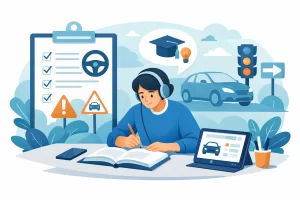
Your theory test is an important step, not just a box to tick before the practical. Road signs, stopping distances, hazard awareness and the Highway Code all support the decisions you will make behind the wheel. Theory support can make a real difference if you are unsure where to start or have struggled with revision before.
When your practical test approaches, lessons should become more focused without losing the emphasis on safe driving. Mock tests can help you experience the format, manage nerves and identify areas that need more work. They are not about trying to catch you out. They are a useful way to practise staying calm when you make a minor mistake and carrying on safely.
It is also worth thinking about test-day arrangements early. Using the car you have learned in can be reassuring because you already know its controls, reference points and handling. Car hire for the driving test can offer that familiarity, provided you are ready and your instructor agrees that you are driving safely at the required standard.
Choosing the right instructor in Bletchley
The relationship with your instructor has a big effect on your progress. Look for a Government Approved Driving Instructor who is clear about how lessons work, listens to your concerns and gives feedback you can use. You should feel comfortable asking questions, including the questions you think might sound basic.
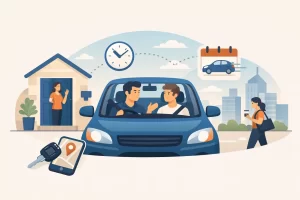
Door-to-door lessons can make learning easier to fit around college, work and other commitments. A local instructor can also choose suitable places to begin each stage of training, from quieter roads for early clutch practice to more demanding routes when you are ready.
Pav’s Driving School provides dedicated manual tuition for learners in Bletchley and the wider Milton Keynes area, with a friendly, professional approach and full-hour one-to-one lessons. The aim is not to rush you through a checklist. It is to give you the skills and confidence to make safe decisions independently.
If you are returning to manual driving
Refresher lessons are not only for learners who have never passed. If you have not driven for years, have moved from automatic to manual, or feel nervous after a difficult experience, a few calm sessions can help rebuild confidence.
You can focus on the areas that concern you most, such as hill starts, busy roundabouts, parking, motorway-style driving or simply getting used to the car again. There is no need to start from the beginning if you already have a licence. The lesson plan should reflect what you need now.
Learning to drive a manual car takes commitment, but every safe move-off, smoother gear change and well-judged decision adds up. Start with an instructor who gives you time to learn properly, and the road ahead will feel far more manageable.