A driving lesson should fit around your life, not create another journey to plan. Door to door driving lessons give learners in Milton Keynes, Bletchley and Newport Pagnell the option of being collected from a suitable local address, then dropped back after a full, focused hour behind the wheel. For busy students, shift workers and parents, that extra convenience can make it far easier to learn regularly.
The benefit is not simply saving time. A familiar pick-up point can help you arrive calmer, settle into the lesson more quickly and keep your attention on driving. With the right instructor, each lesson still has a clear purpose, whether you are learning the basics, building confidence on roundabouts or preparing for your practical test.
What door to door driving lessons involve
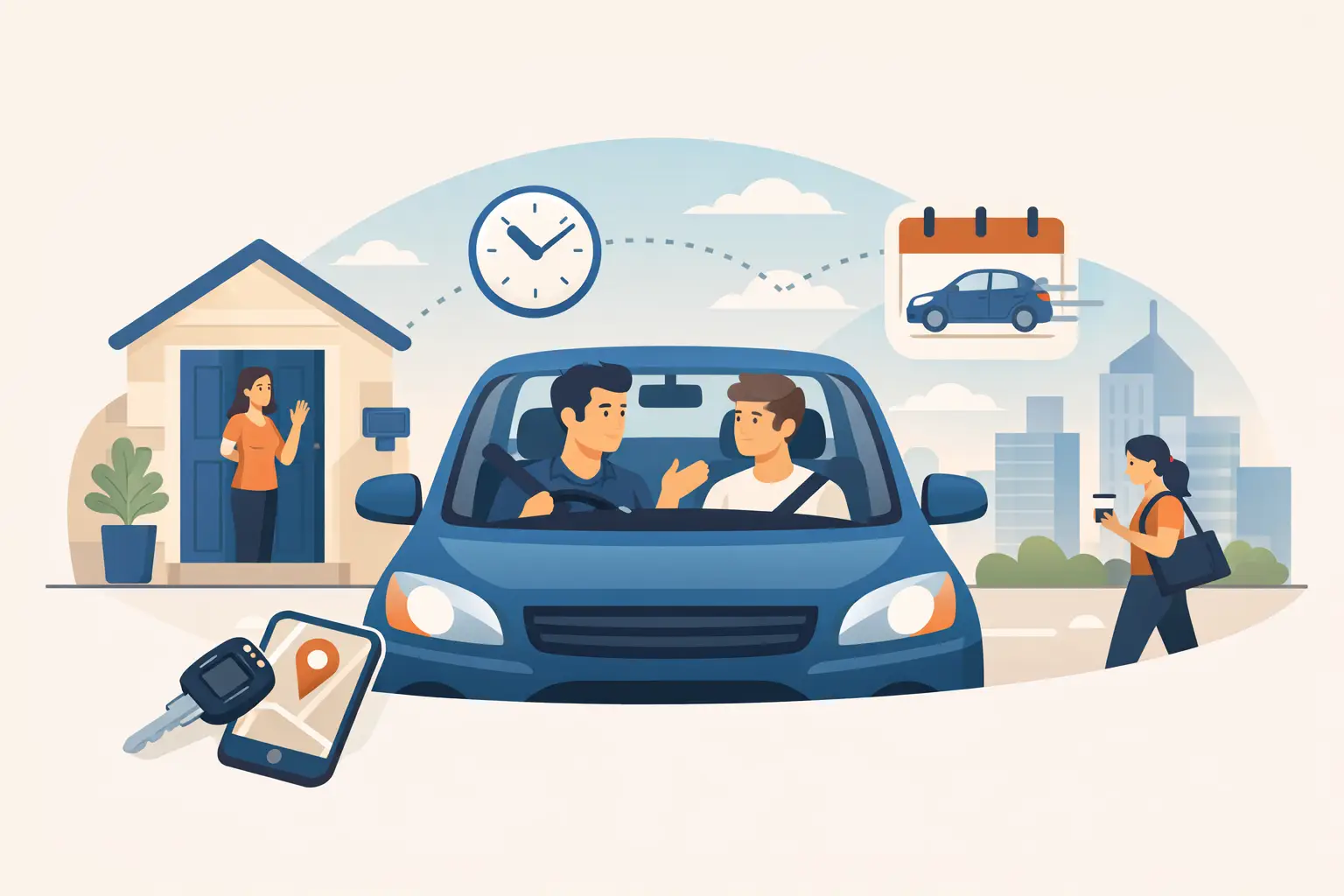
Door-to-door tuition means your instructor meets you at an agreed address within their service area. This may be your home, workplace, college or another sensible, safe location. At the end of the lesson, you are usually returned to the same place or another pre-arranged local address.
For a beginner, the first few collections may need to happen on a quieter nearby road rather than directly outside the door. That is normal. Your instructor will choose a suitable place to begin based on traffic, parking, road layout and your current ability. As your control and awareness improve, the route can start closer to the pick-up point where appropriate.
This is still one-to-one professional tuition, not a lift with some advice along the way. A fully qualified, Government Approved Driving Instructor should plan the session around your progress, explain what you are working on and give feedback that helps you improve before the next lesson.
Why convenient pick-ups can help you learn
Learning to drive takes consistency. Long gaps between lessons can mean spending valuable time revisiting skills that were beginning to feel natural. When collection is straightforward, it is often easier to keep a regular weekly slot and maintain momentum.
It also makes lessons more realistic. Milton Keynes has busy grid roads, frequent roundabouts, residential streets, dual carriageways and varied traffic conditions. Starting from different local areas can gradually introduce you to the roads you are likely to use after passing, rather than limiting every lesson to one small route.
For many learners, convenience reduces nerves too. You do not need to find a bus, ask someone for a lift or arrive early at an unfamiliar meeting point. You can take a moment to get ready, meet your instructor and focus on the task ahead. A calm start matters, especially if you are new to driving or returning after a break.
A practical option for working learners
If you work, study or have family commitments, fitting lessons into a busy week can feel difficult. Door-to-door collection can make a lesson before work, after college or between commitments more achievable, provided the time and address are agreed in advance.
There are sensible limits. An instructor’s travel area, timetable and the distance between pick-ups all affect availability. It is best to be clear about where you would like to start and finish when booking, rather than assuming every location can be covered at every time of day.
Full-hour lessons make the time count
A convenient collection is most useful when the lesson itself is properly structured. Full-hour lessons give enough time to recap the previous session, practise a new skill, reflect on what happened and set a clear focus for next time.
At the beginning, this may mean moving off and stopping safely, steering accurately, changing gears and using mirrors correctly. Manual driving lessons also require you to build clutch control and smooth gear changes, but these skills are taught in stages. You do not need to get everything right immediately.
As you progress, your lessons should move towards independent decision-making. You may practise approaching roundabouts, choosing safe gaps, dealing with meeting traffic, driving in busier conditions and following sat nav directions. The aim is not to memorise test routes. It is to understand how to read the road, make safe choices and stay composed when something changes.
Choosing the right collection point
The most convenient address is not always the best starting point for every lesson. A busy high street, a school gate at collection time or a narrow road with heavy parking may not be ideal for a new learner. Your instructor may suggest a nearby quiet street for the first part of the session, then return to more challenging roads when you are ready.
A good collection point should be safe and legal for the driving school car to stop, with enough space for you to swap into the driver’s seat without pressure from surrounding traffic. It should also allow the lesson to begin without creating inconvenience for neighbours or other road users.
If you are being collected from work, let your instructor know if your finish time can change. A quick message where possible helps keep the schedule reliable for you and other learners. Being ready at the agreed time also protects your full lesson time.
Door-to-door tuition is not just for beginners
Refresher lessons can be just as valuable with local collection. Perhaps you passed some time ago but have not driven recently, feel uneasy on faster roads or want to regain confidence before using a car for work. Starting from home can make the first return lesson feel less daunting.
Your instructor can assess where you are now and build a plan around the situations that concern you. That could include parking, lane discipline, roundabouts, driving at busier times or getting used to a manual car again. There is no benefit in pretending you are more confident than you feel. Honest feedback gives your instructor the chance to support you properly.
What to expect from a supportive instructor
Convenience should never replace quality. Look for an instructor who is fully qualified, patient and clear about how lessons are run. You should know whether you are receiving a full hour of driving time, what vehicle you will learn in, how pricing works and whether block bookings offer a saving.
The lesson should feel relaxed, but it should not be vague. A strong instructor will explain the reason behind each skill, encourage questions and adapt the pace when needed. Some learners are ready to move on quickly; others benefit from extra practice before tackling a more demanding road. Both approaches are valid when safety and progress remain the priority.
Pav’s Driving School provides manual, one-to-one tuition with door-to-door service across Milton Keynes and nearby areas, helping learners build practical skills at a pace that suits them.
Preparing for your practical test
As test day approaches, door-to-door lessons can support a consistent final routine. Your instructor can help you practise the manoeuvres, independent driving and decision-making expected during the practical test, while also identifying any habits that need attention.
It is worth remembering that test preparation is not only about passing on one particular day. Safe observations, good anticipation, sensible speed choices and controlled use of the car are the skills that will matter on every journey afterwards. If you need a car for your practical test, arrange this early so there are no last-minute surprises.
Door-to-door driving lessons remove one barrier from learning, but your progress will come from regular practice, honest effort and patient instruction. Choose a convenient pick-up point, turn up ready to learn and let each lesson take you one steady step closer to driving independently.