Turning up for your practical test in the wrong car is a frustrating way to lose a test slot. The DVSA driving test car requirements are there to make sure the vehicle is safe, roadworthy and suitable for an examiner to use during the test. If your car does not meet the rules, the test may not go ahead – and that can mean extra cost, extra waiting time and a lot of unnecessary stress.
If you are planning to use your own car, or a family member’s, it helps to check everything well before test day. Some rules are straightforward, such as having valid tax and insurance. Others catch learners out, including warning lights, tyre condition, extra mirrors and even cleanliness inside the car. Getting these details right gives you one less thing to worry about when you should be focusing on driving well.
What the DVSA driving test car requirements cover
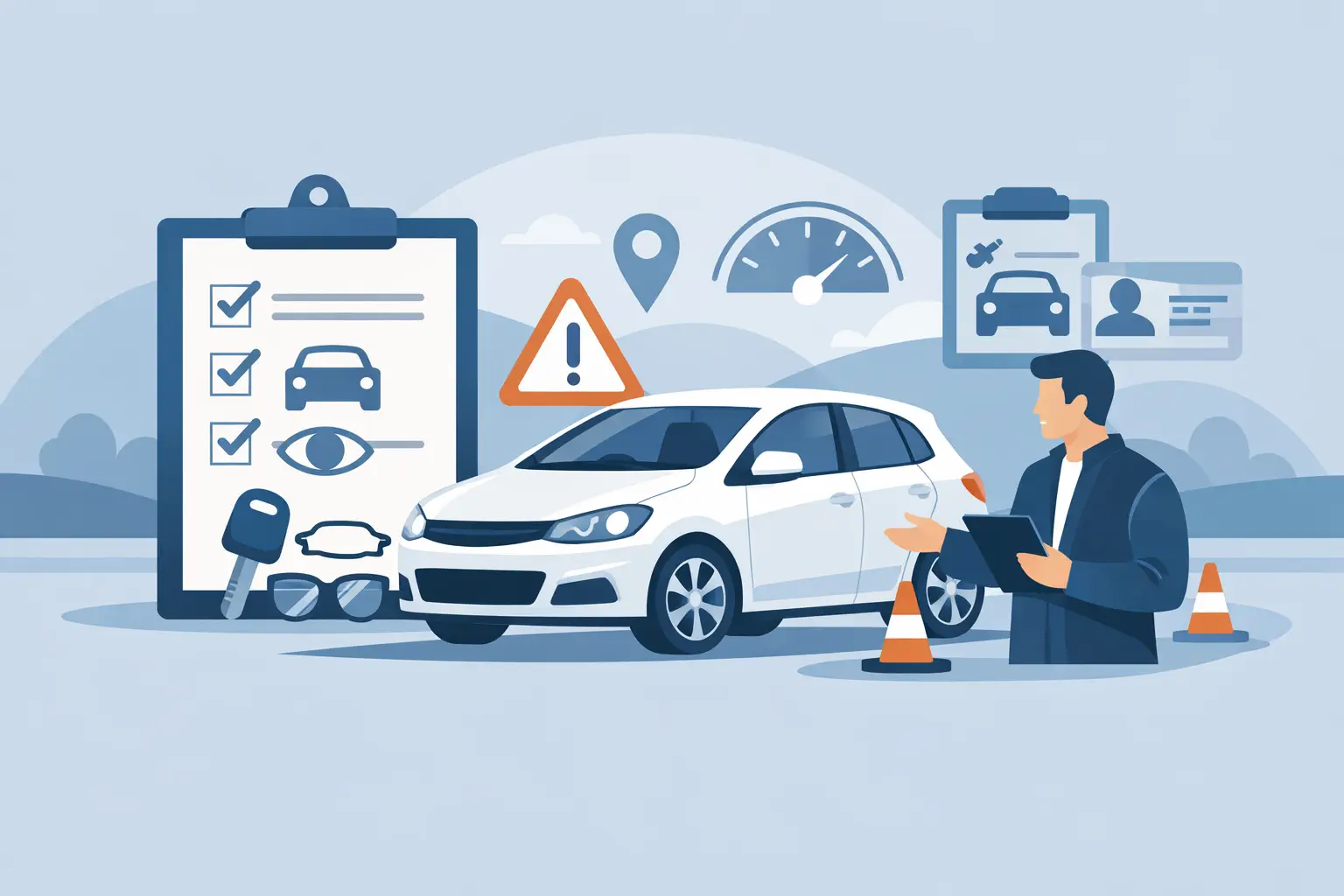
The DVSA wants to see a car that is safe, legal and practical for the test. That means it must be taxed, insured for a driving test, and have a current MOT if one is needed because of the car’s age. It must also be roadworthy, with no serious faults that could affect safety.
The car needs to be a proper test vehicle rather than something unusual or restricted. For most learners, this simply means a standard car in good condition. You will also need an extra interior mirror for the examiner, and the vehicle must display L plates on the front and rear.
There is also a basic presentation standard. The car should be clean enough for the examiner to sit in comfortably and safely. A cluttered dashboard, muddy mirrors or strong smells inside the car can all create problems. It is not about making the car look perfect. It is about making sure nothing interferes with safety or the examiner’s ability to carry out the test.
The main DVSA driving test car requirements to check
Insurance, tax and MOT
The legal paperwork matters just as much as the vehicle itself. The car must be taxed, and if it is over three years old it will usually need a valid MOT. Insurance is where some learners come unstuck. Not every policy covers a driving test, so it is worth checking the wording rather than assuming normal learner insurance is enough.
If you are borrowing a parent’s or friend’s car, double-check that you are insured to drive it for the purpose of taking the test. If there is any doubt, sort it out in advance. Test centres will not usually wait while you try to fix insurance issues on the day.
Warning lights and mechanical condition
No warning lights should be showing for tyres, engine, airbags, ABS or any other safety-related system. Even if the car feels fine to drive, a warning light can be enough for the examiner to refuse to use it. The reason is simple – they cannot take chances with a fault that may affect safety during the test.
The car should also be in generally sound condition. Brakes, steering, mirrors, horn, lights, seatbelts and windscreen wipers all need to work properly. If anything feels questionable in the days before your test, get it checked rather than hoping it will be fine.
Tyres, windscreen and mirrors
Tyres need to meet the legal tread depth and be free from obvious damage. A cut sidewall or badly worn tread is an easy reason for a test not to go ahead. The windscreen must give a clear view of the road, without serious cracks or damage in the driver’s line of vision.
Mirrors should be secure and usable, and the examiner must have a second interior mirror fitted. This is one of the easiest things to forget when using your own car. Fortunately, it is also one of the easiest things to sort in advance.
L plates and passenger seatbelt
The car must have L plates, or D plates in Wales, fitted to the front and rear. They need to be clearly visible. A handwritten sign in the window is not a proper substitute.
The front passenger seatbelt must also be working correctly because that is where the examiner will sit. If the belt is faulty, twisted or difficult to fasten, expect a problem.
Cars that may not be allowed on test
Most ordinary cars are fine, but some models are not accepted for practical tests because of restricted rear visibility. Rules can change, so it is always wise to check the latest DVSA guidance if you have any doubts about the model you plan to use.
This tends to affect a small number of specific vehicles rather than standard learner cars. If you have been learning in a typical manual hatchback or saloon, it is unlikely to be an issue. Still, if you are borrowing something less common, checking first is far better than arriving at the test centre and being turned away.
Convertible cars can also be more complicated. Some are accepted and some are not, depending on design and visibility. This is another area where guessing is not worth the risk.
Cleanliness matters more than many learners expect
A car does not need to be showroom-ready, but it should be clean enough for the examiner to do their job safely. That means the windscreen, windows and mirrors should be clear, the footwells should not be full of rubbish, and the passenger seat should be clean and usable.
If the car smells strongly of smoke, is full of pet hair or has muddy controls and windows, the examiner may decide it is not suitable. Since the practical test puts an examiner in close contact with your vehicle for a fair amount of time, basic cleanliness is part of being prepared.
This is especially relevant in bad weather. If it has been raining, make sure the windows are not steaming up and the demisters work properly. If it has been frosty, leave enough time to clear the glass fully before you arrive.
Using your instructor’s car or your own car
For many learners, using an instructor’s car is the easier option. The vehicle is usually already set up for test standards, with dual controls, the extra mirror and the right insurance in place. Just as importantly, it will be the car you know best, which can help settle nerves on the day.
Using your own car can still work well if you are comfortable in it and it meets all the rules. Some learners prefer this because they have been practising privately in that car for weeks. The trade-off is that the responsibility falls on you to make sure everything is correct. One missing detail can stop the test before it starts.
That is why some learners choose car hire for the driving test through their instructor. It removes a lot of the uncertainty and gives you a familiar setup. For nervous drivers, that peace of mind can make a real difference.
Common mistakes that cause problems on test day
The biggest issue is assuming the car is fine because it is normally driven every day. A car can be perfectly usable for everyday journeys and still fail the DVSA standard for a practical test if, for example, an engine warning light is on or the extra mirror has been forgotten.
Another common mistake is checking the obvious things but missing the finer points. Learners remember L plates, then overlook insurance wording. They check tyre tread, then forget the passenger seatbelt. They clean the outside, then leave the inside cluttered.
Timing matters too. If your test is early in the morning, do not leave all checks until five minutes before your appointment. Give yourself enough time to spot and fix a problem, or to contact your instructor if you need another plan.
A simple way to prepare your car before the test
It helps to do one full check a few days before the test and then a shorter check on the day. A few days beforehand, look at the tyres, lights, mirrors, windscreen, wipers, washer fluid, warning lights, tax, insurance and MOT. Fit the extra mirror and make sure the L plates are secure.
On the day, make sure the car is clean, fuelled, and ready to drive without any last-minute surprises. Start it early enough to spot warning lights. Check the windows are clear, the seatbelts work and the examiner’s seat is tidy.
If anything is not right, be realistic. It is better to deal with the issue honestly than hope it will be ignored.
If you are unsure, ask before test day
The safest approach is to raise any doubts before your appointment rather than on the day itself. If you are learning with an instructor, ask them to look over the car if you plan to use your own. A qualified instructor will often spot things a learner might miss, especially around test rules rather than basic driving.
For learners in Milton Keynes, Bletchley or Newport Pagnell, this is one of the reasons structured test preparation is so useful. At Pav’s Driving School, practical test support is designed to help learners arrive properly prepared, not just ready to drive but ready with a suitable car as well.
A good test day starts long before you meet the examiner. When your car meets the rules and you know it is ready, it is much easier to put your energy into what really matters – staying calm, driving safely and showing what you can do.