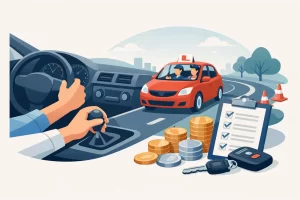
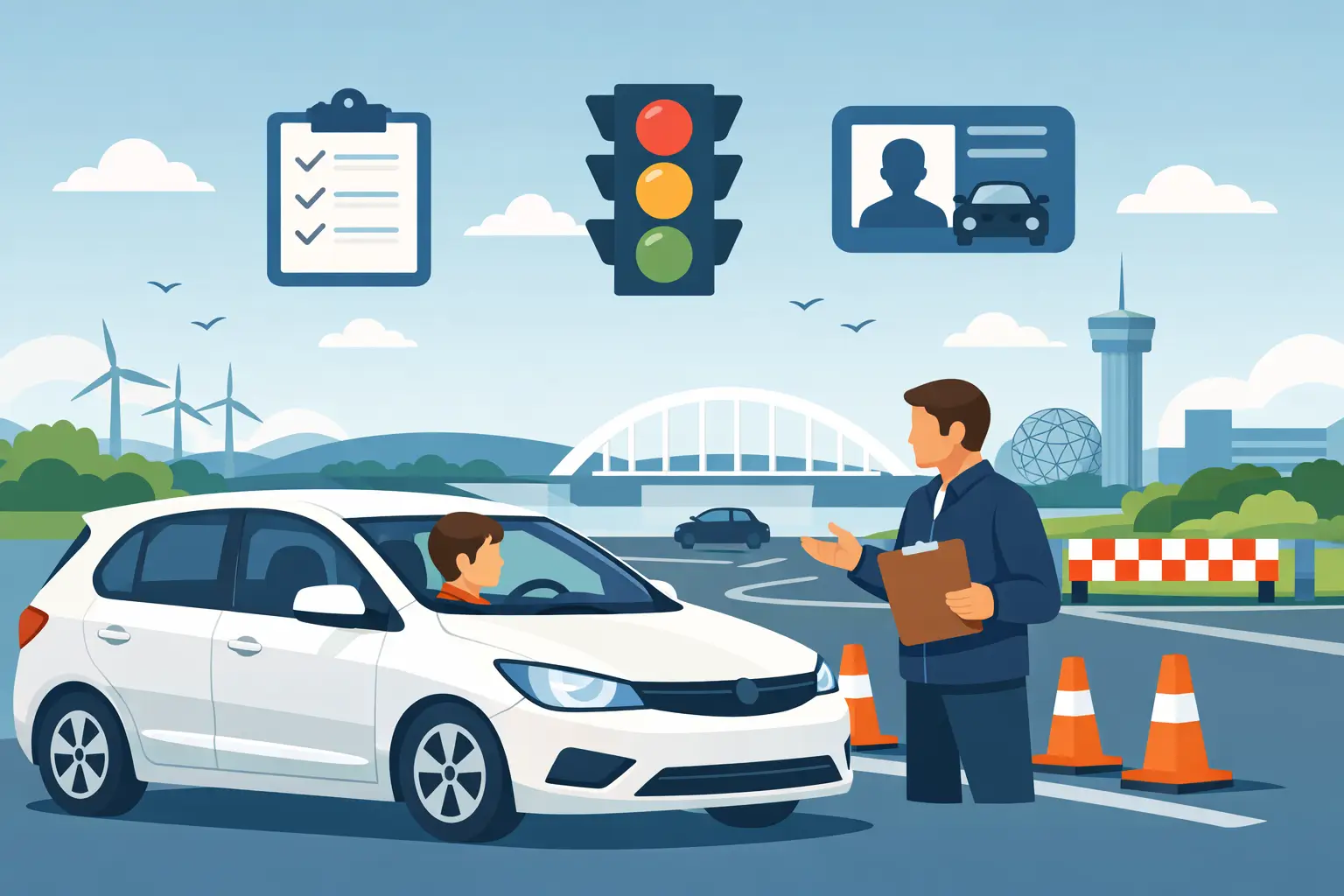
Your practical test is not the day to get used to a different clutch, unfamiliar mirrors or controls that are in the wrong place for you. Driving test car hire Milton Keynes gives you the option of taking your test in the same manual car you have learned in, with the support of an instructor who knows your progress and understands what helps you stay calm.
For many learners, hiring their instructor’s car is the most straightforward test-day choice. It removes one major unknown from a day that can already feel significant. The car still needs to be suitable for the test, and you still need to be ready to drive safely on your own, but familiarity can leave more of your attention free for the road ahead.
What driving test car hire in Milton Keynes usually includes
Test car hire is more than being handed a set of keys outside the test centre. It generally includes use of a properly maintained, insured driving-school vehicle for the practical test. The car should meet DVSA requirements, display L plates where required and have a suitable extra interior mirror for the examiner.
When car hire is arranged through your instructor, it will often also include a lesson or warm-up drive before the test. This is valuable time. You can settle into the car, revisit any point that needs attention and arrive at the test centre without relying on a lift or trying to manage last-minute nerves alone.
At Pav’s Driving School, test preparation is approached as part of your wider learning rather than a separate, rushed appointment. You will have had time to build confidence in the manual car’s clutch control, gears, steering and reference points before test day.
The exact arrangement can vary, so ask clearly what your booking covers. Confirm the collection time, the length of the pre-test drive, whether travel to and from the test centre is included, and what happens if the test is delayed or cancelled. Clear information upfront avoids unwanted surprises.
Why a familiar manual car can help on test day
A driving test assesses how safely and independently you drive, not how quickly you can adapt to a new vehicle. However, changing cars can add avoidable pressure. Bite points differ, brake pedals feel different and even the position of the indicator stalk can briefly distract you.
In a familiar car, many basic actions feel more natural. You know how much pressure the pedals need, how the gears engage and where your controls are without searching for them. That does not make the test easier in terms of the standard required, but it can make your driving feel more settled.
This matters particularly in Milton Keynes, where roundabouts, changing lane positions and busy junctions can demand good observation and well-timed decisions. If you are not also thinking about an unfamiliar clutch or the car’s size, you are better placed to read the road, plan ahead and drive smoothly.
There is also a practical safety benefit to using a dual-controlled instructor car. Your instructor will not be involved during the test itself, but the vehicle is designed for learner use and maintained with lessons in mind. It is a sensible option for learners who do not have access to a suitable family car.
Car hire is for test-ready learners, not a shortcut
Hiring a car does not guarantee a pass, and a responsible instructor should not present it that way. The examiner will still expect safe, legal and controlled driving throughout the test. You must be able to follow directions, deal with normal traffic situations, complete the required manoeuvre and drive independently when asked.
Before agreeing to test car hire, your instructor should be satisfied that you are driving at a safe test standard. This is about protecting you, other road users and the instructor’s vehicle. It also helps prevent the expense and disappointment of taking a test before you are genuinely prepared.
Being test-ready does not mean driving perfectly or never feeling nervous. Most people feel some nerves. It means that, when something unexpected happens, such as a pedestrian stepping near a crossing or traffic building at a roundabout, you can respond safely without your instructor needing to prompt you.
If there are still recurring problems with observations, lane discipline, meeting traffic or clutch control, a few more focused lessons are usually a better investment than rushing into a test. A good instructor will explain the reason clearly and help you make a realistic plan.
How to prepare for driving test car hire in Milton Keynes
Start by discussing your test date well in advance. This gives you and your instructor time to plan appropriate lessons and identify any areas that need more practice. It also makes it easier to arrange car availability, especially around busy test dates.
In the final lessons, aim for realistic independent driving rather than repeatedly practising one route. You may encounter familiar roads around Milton Keynes, Bletchley or Newport Pagnell, but the test is designed to assess your ability to drive safely wherever you are directed. Strong habits matter more than memorising roundabouts.
Use the pre-test lesson to get into a steady routine. Adjust your seat and mirrors, check that you are comfortable with the controls and take a few calm minutes to drive normally. Avoid trying to learn a new manoeuvre or cramming every possible test question immediately before your appointment. At that stage, reassurance and a clear head are more useful.
It helps to have these essentials checked before you leave:
- your valid provisional driving licence
- confirmation of your practical test appointment
- suitable footwear that gives you good pedal control
- any glasses or contact lenses you need to meet the eyesight requirement
You should also eat something light, allow plenty of time and wear clothing that lets you move comfortably. Small practical details can make a real difference when you are managing nerves.
Questions to ask before booking test car hire
First, ask whether your instructor considers you ready for the test. This should be an honest conversation based on your recent driving, not simply on how long you have waited for an appointment.
Next, ask what vehicle you will use and whether it is the car you have been learning in. If it is a different car, arrange time to become comfortable with it before test day. A short drive on the day may not be enough if the clutch, seating position or controls feel unfamiliar.
You should also confirm the total cost and what it includes. Transparent pricing matters. Check whether the charge covers the instructor’s time, the warm-up lesson, use of the car for the test and the return journey afterwards. Ask about the cancellation policy as well, because practical test appointments can sometimes be moved at short notice.
Finally, ask what happens if the test is cancelled because of weather, an examiner issue or another circumstance outside your control. Knowing the process in advance can reduce stress if plans change.
If you are using a family car instead
Using a family car can work well if you have had enough practice in it and it meets the requirements for a driving test. It may be the lower-cost choice, particularly if you are already insured and comfortable driving it. But it is worth weighing that saving against the pressure of using a car with no dual controls or travelling to the test centre with someone who may be as nervous as you are.
Make sure the vehicle is roadworthy, correctly insured for the test and suitable under DVSA rules. Some cars are not allowed, including certain models with restricted visibility. You will also need an appropriate additional mirror for the examiner. Checking these details early is far better than discovering an issue on the morning of the test.
For many learners, the deciding factor is confidence. If you drive well in the family car and feel relaxed in it, it may be a good option. If you feel most composed in your instructor’s manual car, hiring it can be money well spent.
Your test day only asks you to show the safe driving skills you have already built. Choose the car that lets you focus on those skills, arrive prepared and give yourself the calmest possible start.