A lesson that fits around college, work shifts or family plans is much easier to keep. But when you are planning to learn in a manual car, the choice between hourly lessons or block booking can affect more than your budget. It can shape how consistently you practise, how quickly your confidence builds and how prepared you feel when it is time to book your practical test.
There is no single right answer for every learner in Milton Keynes, Bletchley or Newport Pagnell. The best option is the one that gives you enough regular practice without placing unnecessary pressure on your finances or schedule.
Hourly lessons or block booking: the real choice
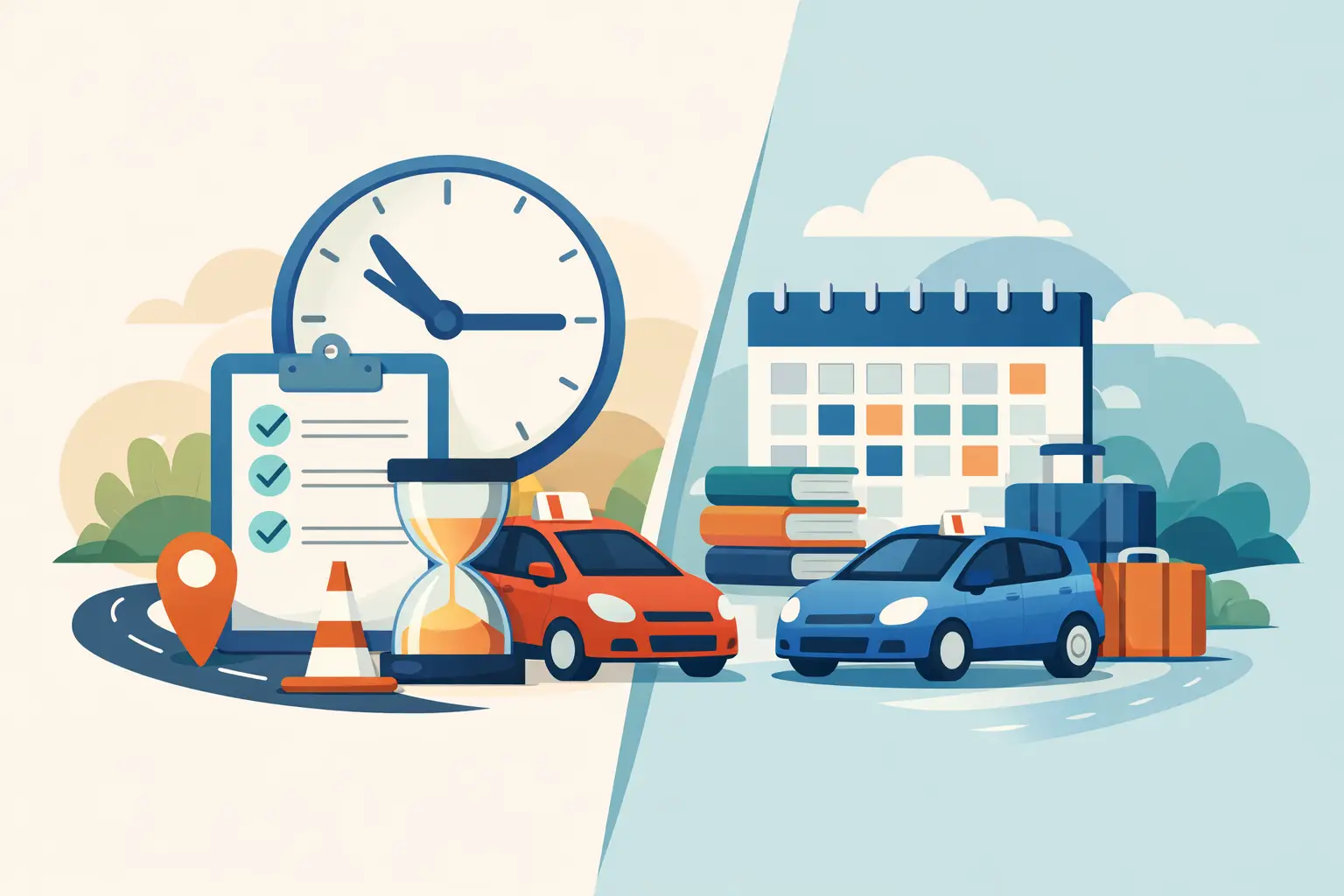
Hourly lessons are usually paid for as you go. You book the time you need, pay lesson by lesson and retain maximum flexibility. A block booking means paying in advance for a set number of hours, often at a reduced hourly rate.
The difference is not simply about paying now or later. Learning to drive is a skill built through repetition. You need time to understand the controls, make safe decisions, deal with busy junctions and develop good habits until they feel natural. A lesson plan that helps you attend regularly can make that process steadier.
At the same time, driving tuition should never feel like a race. A learner who has booked several lessons should still feel able to ask questions, revisit a manoeuvre or spend extra time on roundabouts if that is what they need. Good progress comes from focused practice, not from trying to get through hours as quickly as possible.
When hourly lessons may suit you best
Pay-as-you-go lessons can be a sensible choice if your income changes from month to month or your diary is difficult to predict. This is common for students, people working variable shifts and parents balancing several commitments. You can arrange lessons around what is realistic for you without committing a larger amount upfront.
Hourly booking can also suit complete beginners who want to experience a few lessons before deciding on a routine. Your first sessions are about getting comfortable in the driver’s seat, learning the basic controls and understanding how your instructor teaches. Once you know that you feel relaxed and supported, it may be easier to plan further ahead.
This approach gives you useful breathing room. If you need to pause lessons for a holiday, exams or a busy period at work, you are less likely to feel that you have already paid for time you cannot use immediately.
The trade-off is that hourly lessons can cost more per hour than a prepaid package. It may also be easier to let long gaps develop between lessons. A gap of a week is often manageable, but repeated gaps of several weeks can mean spending part of each lesson refreshing skills you had started to build.
Why block booking helps many learners progress
A block booking is often a good fit when you are ready to learn consistently and can comfortably budget for the upfront cost. The usual benefit is a lower cost per lesson, which can make a meaningful difference over the full course of learning.
More importantly, a block can encourage a regular lesson pattern. For example, one or two full-hour lessons each week gives you frequent opportunities to build on what you covered last time. You are more likely to remember your reference points for manoeuvres, improve your clutch control and carry forward feedback from earlier drives.
Regular lessons are particularly helpful once you begin driving on busier roads. Milton Keynes has its share of roundabouts, dual carriageways and changing traffic conditions. Repeated, calm practice helps you learn to read approaching traffic, choose safe gaps and plan ahead rather than reacting at the last moment.
A block booking can also provide structure as your test approaches. If you have developed the core skills and are working towards independent driving, your instructor can plan lessons around areas that need strengthening. That may include meeting traffic at narrow roads, parking, larger roundabouts, country roads or mock test practice.
However, a block is not automatically the better option. It only makes sense if the payment is affordable and you can attend consistently. Prepaying for lessons should make learning feel more manageable, not create financial worry.
Think about your learning stage
Your current experience is a useful guide. A brand-new learner may value the freedom of hourly lessons at first, especially while working out how often they can realistically practise. After a few sessions, many learners find that a block gives them a clearer routine and better value.
If you have already had lessons in the past, a short run of regular tuition may be more useful than spreading lessons too far apart. Returning learners often remember more than they expect, but confidence can take time to return. A structured plan allows you to refresh the basics before moving back into more demanding situations.
For learners close to test standard, the question changes slightly. You may need a focused group of lessons to prepare for a practical test, practise likely routes and make sure you are ready to drive safely without prompts. In this stage, regularity matters more than chasing a particular number of hours. Everyone learns at a different pace, and no responsible instructor should promise a pass after a fixed amount of tuition.
Cost matters, but so does lesson quality
It is understandable to focus on the headline saving of a block booking. Learning to drive is a significant investment, and value matters. Still, the cheapest hourly figure is not the whole picture.
Ask whether lessons are full hours, whether pricing is clear from the start and whether you are receiving one-to-one tuition from a fully qualified, Government Approved Driving Instructor. You should know what you are paying for and feel that the time in the car is productive.
A calm, patient instructor can make each hour go further. When you feel comfortable asking why something went wrong, you can correct it properly rather than simply trying to get through the lesson. That is especially valuable in a manual car, where clutch control, gear selection and timing can feel demanding at first.
Pav’s Driving School offers full-hour, one-to-one manual lessons with transparent pricing, so learners can choose the booking approach that fits their circumstances while receiving consistent support.
How often should you book driving lessons?
For many learners, one or two lessons a week provides a useful balance. One weekly lesson can work well when you have time to reflect on feedback and, where possible, practise privately with suitable supervision. Two lessons can help skills settle more quickly, particularly if you are aiming for a test within a certain timeframe.
Less frequent lessons are not a failure, and they may be the only practical option for some people. The key is to be realistic. If you can only book every other week, expect progress to be more gradual and use the time between sessions wisely. Review what you covered, revisit road signs and think through the decisions you found difficult.
Your instructor should help you set a pace that is safe and achievable. It is better to have a steady plan you can maintain than an intense schedule that leaves you exhausted, short of money or unable to absorb what you are learning.
Questions to ask before choosing a package
Before paying for a block, check the practical details. Ask how many hours are included, whether there is an expiry period, what happens if you need to rearrange a lesson and how much notice is required. You should also understand whether the block can be used for refresher tuition, test preparation or the use of the instructor’s car for your practical test, where applicable.
It is worth discussing your goal openly too. Are you starting from scratch, returning after a break or hoping to prepare for a test soon? A good instructor can recommend a sensible lesson frequency based on your experience, availability and confidence, rather than pushing you towards a package that does not suit you.
Choose the option you can keep up with
Hourly lessons offer flexibility and a lower immediate commitment. Block booking can offer better value and a more consistent learning routine. Both can work well when they are matched to your budget, timetable and stage of learning.
The most useful choice is the one that lets you turn up regularly, stay relaxed and give each lesson your full attention. Safe, confident driving is built one decision at a time, and a plan that feels manageable is far more likely to keep you moving forward.