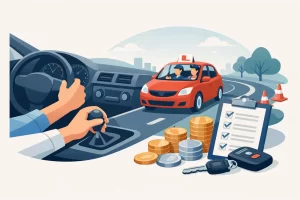
Your practical test is not the day to get used to a different clutch, unfamiliar mirrors or controls you have never used before. Driving test car hire gives you the chance to take your test in a manual car you already know, helping you focus on the road, the examiner’s instructions and the decisions you make.
For many learners in Milton Keynes, Bletchley and Newport Pagnell, using their instructor’s car is the most reassuring option. It keeps test day familiar and structured, especially after lessons have been built around the same vehicle. The car will not pass the test for you, but feeling comfortable in it can remove one avoidable source of pressure.
What driving test car hire usually includes
When a driving school provides a car for the practical test, the booking normally covers use of the instructor’s dual-controlled vehicle for the test itself. It may also include the time needed to travel to the test centre and a short drive beforehand, depending on the agreed booking and your test time.
At Pav’s Driving School, test-day car hire is part of a wider one-to-one preparation process, not simply a vehicle handover. You should understand the car’s controls, have practised independent driving and be ready to complete the usual eyesight check, safety questions and driving exercise without being rushed.
The car should be roadworthy, correctly insured and suitable for a DVSA practical test. An instructor’s vehicle will also have dual controls, which provide an extra layer of safety if intervention is genuinely needed. In normal circumstances, though, the aim is for you to be fully in control from the moment the test begins.
Before booking, ask exactly what is included. Confirm the collection time, whether a warm-up drive is planned, how long the car is available for and what happens if the test is delayed or cancelled. Clear arrangements prevent surprises at a time when you want to concentrate on driving well.
Why a familiar manual car can make a difference
Manual driving involves more than selecting the right gear. You need to judge the clutch bite, move away smoothly on hills, manage slow traffic and make safe progress at junctions. Every car feels slightly different, even when the controls are in similar places.
A familiar car lets these actions feel more natural. You know how much pressure the brake needs, where the biting point is likely to be and how the steering responds at lower speeds. That familiarity can leave more mental space for observation, planning and responding safely to changing road conditions.
This matters on the roads around Milton Keynes, where roundabouts, dual carriageways, changing speed limits and busy junctions can all appear during a test. The standard is not about driving perfectly or knowing a secret route. It is about showing that you can drive safely, independently and with appropriate control.
There is a trade-off. Hiring your instructor’s car is an additional cost, and it should not be treated as a substitute for proper preparation. If you have only driven your own family car, changing vehicles immediately before the test may not suit you. In that situation, it may be better to take several focused lessons in the test car first, rather than assume one short drive will be enough.
When should you book a test car?
Book driving test car hire only when your instructor believes you are approaching test standard and you have a confirmed practical test appointment. A sensible instructor will be honest if more practice is needed. Taking a test before you are ready can cost more than arranging a few extra lessons and may knock your confidence.
It is helpful to discuss car hire as soon as you have a test date, particularly if your appointment is early in the morning or during a busy period. Your instructor needs to keep that time free, and you may need to plan lessons around the same test centre and likely road types.
If you are a refresher learner or have recently changed instructors, allow time to settle into the vehicle. Practise moving off, hill starts, reversing, parking and driving at normal road speeds. Then use the remaining lessons to work on the areas that need the most attention, whether that is roundabout lane choice, meeting traffic or keeping a good driving plan.
Preparing for the day of your practical test
The best test-day routine is calm and familiar. Aim to arrive with enough time to settle, but avoid turning the warm-up drive into a last-minute intensive lesson. A short drive can help you get comfortable, check your seating position and practise a few routine manoeuvres. It should not leave you tired or overloaded with new advice.
Make sure you bring your provisional driving licence. Check your test confirmation details in advance, including the test centre location and appointment time. Wear comfortable footwear that gives you a good feel for the pedals, and bring any glasses or contact lenses you need for driving.
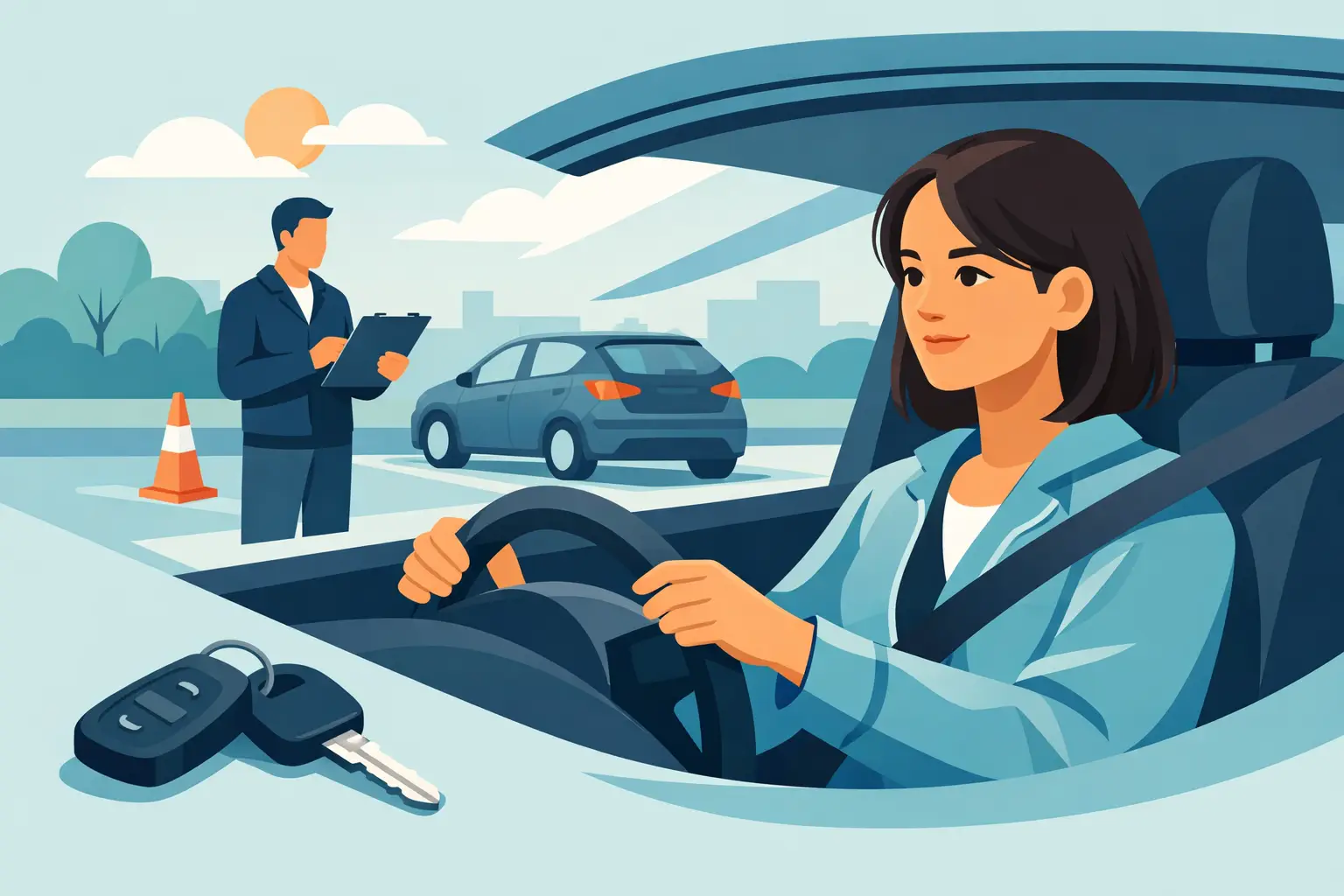
It is also worth checking the basic vehicle setup before you leave. Adjust the seat so you can fully depress the clutch, set the mirrors correctly and make sure you know where the demisters, lights, wipers and hazard warning lights are. You may be asked a ‘show me’ question while driving, so these controls should feel familiar rather than something you need to search for.
Nerves are normal, including for learners who drive very well in lessons. Do not try to eliminate nerves completely. Instead, give yourself a simple plan: breathe, listen carefully, take your time at decision points and keep looking well ahead. If you make a small mistake, do not assume the test is over. Regain your focus and continue driving safely.
Your instructor’s role on test day
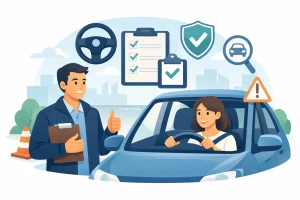
Your instructor is there to support your preparation, not to influence the examiner. During the practical test, the examiner gives directions and assesses your driving. If your instructor sits in the back, they must remain quiet unless the examiner asks them to speak.
Before the test, a good instructor can help you identify whether you are genuinely ready. They can run a realistic mock test, explain any repeated faults and make sure you understand what the examiner is looking for. This is particularly useful if you tend to drive confidently on familiar routes but lose concentration when directions change.
After the test, your instructor can help you make sense of the result. If you pass, the focus shifts to building independent experience safely. If you do not pass this time, the examiner’s feedback gives a clear starting point for your next lessons. One result does not define your ability or your future as a driver.
Is hiring a car always the right choice?
Not necessarily. If you have regular access to a suitable, insured family car and you have completed most of your practice in it, using that car may be the more familiar and affordable choice. You must still make sure it meets the DVSA’s requirements and is properly prepared for the test.
Instructor car hire is often the better option when you have trained mainly in that vehicle, need dual controls for reassurance, or want a test-day warm-up with a qualified ADI. It can also be useful when the family car is unavailable, unsuitable or difficult to insure for the test.
The key is consistency. Choose the vehicle that allows you to demonstrate your normal, safe driving at its best. Spend enough time practising in it beforehand, and make the decision early enough that test day feels like the next step in your training, not a change of plan.
A familiar car, a realistic final lesson and a clear head will not remove every test-day nerve, but they can help you give a fair account of the safe driver you have worked hard to become.